
Labor Movements in Modern America: Revisiting Solidarity and Collective Action
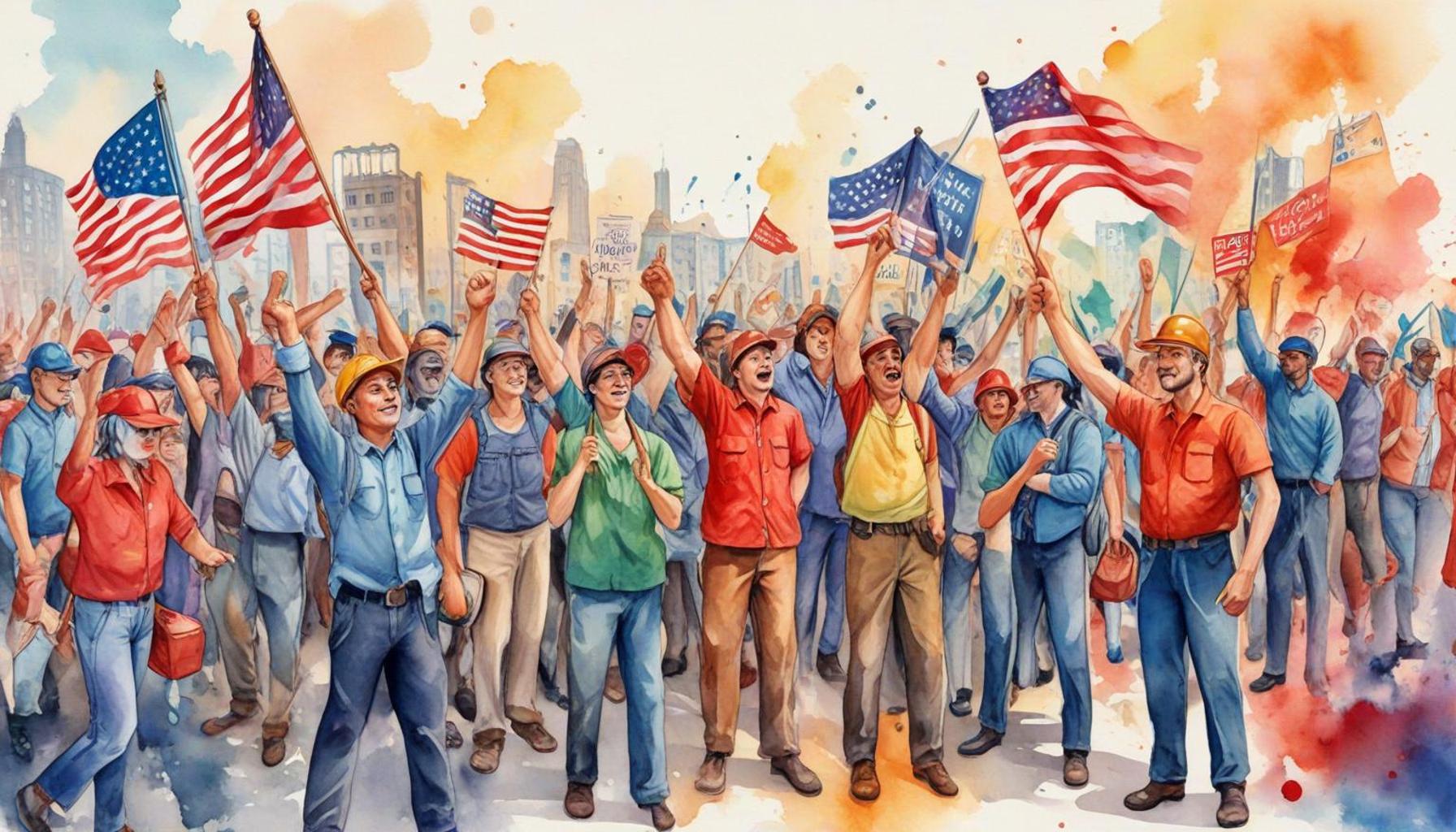
The Current Landscape of Labor Movements
The landscape of labor movements in the United States has evolved significantly over the decades, marked by a confluence of factors driving today’s workers to mobilize. As economic hardships, such as inflation and stagnant wages, continue to affect many households, the growing need for collective action becomes increasingly apparent. The gig economy, characterized by flexible jobs that often lack traditional employment benefits, has emerged as a double-edged sword; while it offers freedom and flexibility, it often leaves workers vulnerable without the protections afforded by unions and established labor laws.
In response to these challenges, worker organizations have emerged as vital players in advocating for employee rights. Unions, in particular, have been revitalizing their strategies to engage younger workers who are entering the labor force. These organizations provide essential services, from negotiating better pay to ensuring workplace safety. For instance, the Fight for $15 movement has garnered attention nationwide, demanding a $15 minimum wage and the right to unionize for fast-food workers. Their efforts highlight how grassroots movements can rally significant public support and influence legislative change.
Legislation and Worker Protections
Amidst growing awareness, legislative action has also begun to reflect the dire need for improved worker protections. Recently, lawmakers have introduced bills aimed at combating wage theft, improving safety regulations, and enhancing job security for vulnerable workers. For example, legislation in states like California has sought to address the rights of gig workers by expanding access to benefits that were previously reserved for full-time employees. This legislative trend underscores a shift in how policymakers are perceiving labor issues and highlights a growing acknowledgment of the need for comprehensive labor reform.
The Role of Public Awareness
Moreover, public awareness plays a crucial role in enhancing the visibility of labor issues. With increased media coverage surrounding labor protests, strikes, and workplace injustices, the narrative around labor rights has shifted from being an underground labor discourse to a public conversation. Social media platforms have provided a space for workers to voice their grievances, garnering solidarity across diverse industries. The hashtag #UnionStrong, for instance, has gone viral, enabling countless workers to share personal stories and advocate for collective bargaining rights.
Survey Insights and Emerging Trends
Recent surveys indicate a renewed interest in union participation, with 56% of Americans expressing approval of labor unions. This approval rating is particularly pronounced among younger demographics, with a significant uptick in union membership recorded in sectors like technology and retail. Emerging industries are recognizing the importance of organizing efforts to combat potential exploitation in their respective fields. This resurgence signifies a crucial turning point in labor activism, with young workers eager to harness the power of collective action for their rights.
As these labor movements continue to gain momentum, understanding their dynamics is vital for envisioning a future characterized by fair labor practices. This exploration not only delves into the pressing issues facing modern labor movements but also illuminates the collective actions being undertaken to address them. It serves as a reminder of the ongoing struggle for workers’ rights and the potential for collective action to redefine the workplace in America.
Reexamining the Principles of Solidarity
At the heart of labor movements is the principle of solidarity, a concept that advocates for unity and mutual support among workers. In today’s America, where economic disparities are widening and many find themselves facing precarious job conditions, solidarity has transformed into an urgent necessity. Workers are banding together not only to advocate for improved pay and benefits but also to combat workplace injustices that disadvantage underrepresented groups, including women, people of color, and immigrant workers.
The Resurgence of Grassroots Movements
Emerging from this climate of need are grassroots movements that embody the spirit of collective action. These initiatives focus on elevating the voices of marginalized laborers who have often been overlooked in traditional union dialogues. Notable movements, such as the Union of Southern Service Workers and the Farm Labor Organizing Committee, are working diligently to ensure that farmworkers and service employees receive fair treatment and recognition. Their efforts include organizing strikes, engaging in policy advocacy, and leveraging digital platforms to amplify their message.
Key Issues Facing Modern Workers
Modern labor movements are tackling several pivotal issues that resonate with many workers across the nation, including:
- Wage Inequality: Despite economic growth, many workers continue to experience stagnant wages, prompting demands for increased minimum wages.
- Job Security: The rise of temporary and contract work brings instability, leading to calls for policies that guarantee more sustainable employment.
- Health and Safety: Essential workers, especially during the COVID-19 pandemic, have spotlighted the inadequacies in workplace safety protocols, prompting unions to fight for stronger regulations.
- Discrimination and Harassment: Initiatives aimed at combatting systemic discrimination highlight the need for equitable treatment across all race, gender, and class lines.
This multi-faceted approach reveals the complex nature of modern labor issues and emphasizes the need for an inclusive framework that considers the experiences of all workers. By addressing both economic and social dimensions, labor movements are showcasing how collective action can effectively confront systemic challenges while advocating for justice and equality.
Building a Culture of Cooperation
A significant part of the revival of labor movements in America can be attributed to a renewed emphasis on building a culture of cooperation. New alliances are being formed between traditional labor unions and community organizations, creating a synergistic effect that amplifies their messages. For instance, partnerships with environmental groups have emerged, aligning the goals of sustainability with labor rights, thus broadening the appeal and urgency for reform. This cross-sector collaboration not only fosters a sense of collective responsibility but also enhances public support for labor initiatives, which is critical to their success.
As solidarity takes center stage, workers are not just standing together; they are also redefining what it means to cooperate across industries and communities. By examining the current trends and dynamics within these movements, a deeper understanding of the ongoing struggle for labor rights can be achieved, pointing towards a potentially transformative future for American workers.
The Role of Technology in Labor Movements
In a rapidly changing economic landscape, the influence of technology has become unmissable within labor movements. Modern workers are harnessing digital tools to mobilize efforts, create networks, and raise awareness on critical labor issues. Social media platforms serve as vital channels for communication, allowing labor groups to reach wider audiences, promote solidarity, and organize collective actions more efficiently than ever before.
Innovative Organizing Strategies
Incorporating technology into labor strategies has led to innovative approaches to organization. Applications like Signal and WhatsApp provide secure, encrypted channels for workers to coordinate without fear of surveillance from employers. This has been particularly crucial in industries notorious for retaliating against union activities, as seen in the tech sector where companies like Amazon and Google have faced significant backlash for their anti-union tactics. The use of digital organizing tools has empowered workers to plan rallies, strikes, and informational sessions, breathing new life into the age-old strategies of unions.
The Impact of Gig Economy
Another area of focus for modern labor movements is the gig economy, where many workers find themselves categorized as independent contractors rather than employees. This classification denies them access to essential benefits and protections afforded to traditional employees, prompting a heated debate over labor rights. Organizations like the National Domestic Workers Alliance and Gig Workers Collective have emerged to advocate for gig workers’ rights, demanding legal recognition and protections that reflect their contributions to the economy.
Cities like New York and San Francisco have introduced landmark policies aimed at providing gig workers with protections such as minimum wage guarantees and unemployment benefits, highlighting a new frontier for labor advocacy. However, the fight is far from over as many states grapple with balancing innovation and worker rights in this evolving employment landscape.
Intersectionality in Labor Advocacy
The concept of intersectionality has gained prominence within labor movements, emphasizing the interconnected nature of social categorizations such as race, class, and gender, and their cumulative impact on experiences of oppression and discrimination. This understanding is reshaping how labor movements address not just economic concerns, but also social justice issues.
For instance, organizations such as Color Of Change and Black Lives Matter have partnered with labor unions to highlight how racial injustice and labor exploitation intersect. This broadening of focus enables the movements to build solidarity across various social grievances, thus attracting a more diverse support base. With this multi-dimensional approach, the labor movement is increasingly positioning itself as a leader in advocating for comprehensive social reform.
Future Directions for Labor Movements
Looking ahead, it is evident that modern labor movements are on the brink of a potential transformation. As they adapt to challenges posed by technology and the gig economy, alongside a growing emphasis on intersectionality and social justice, workers are redefining the fabric of solidarity. The question remains, however, whether these movements can retain their momentum and unite diverse voices in a manner that effects meaningful change in policies and practices.
Equipped with technological tools and a focus on inclusivity, American labor movements are not just rewriting the narrative of collective action; they are acting as catalysts for broader societal shifts. In this landscape, the potential for transformative change lies in the very essence of solidarity – a bond as vital today as it was in the past.
Conclusion
In the contemporary landscape of labor movements across the United States, it is evident that a profound evolution is underway. As workers from diverse sectors come together, they are redefining the notion of solidarity, leading to robust collective action that seeks not only economic reforms but also wider social change. The integration of technology into organizing efforts has become a game-changer, facilitating new forms of communication and mobilization that were previously unimaginable. Digital platforms enable workers to unite their voices, effectively strategizing against employer resistance, particularly in industries facing fierce opposition to unionization efforts.
The gig economy, while presenting both challenges and opportunities, has catalyzed a shift in advocacy strategies, urging labor movements to accommodate the unique realities faced by independent workers. Additionally, the recognition of intersectionality enriches the conversation around labor rights, pushing movements to embrace a broader spectrum of social justice issues that intersect with workers’ struggles. By fostering inclusivity and collaboration across various identities, labor movements are not only addressing economic disparities but are also becoming champions of racial and gender equity.
As we look to the future, the potential for transformative change remains promising. The key question lies in whether these movements can sustain their momentum and continue to unite various voices around the common goal of equity and justice. By embracing their historical roots while innovating for the present and future, labor advocacy has the capability to enact systemic changes that align with the evolving landscape of work in America. The journey toward a more inclusive and equitable society is ongoing, and the role of labor movements as catalysts for change has never been more critical.
Related posts:
Comparative Analysis: Actions of Technology Companies vs. Traditional Sectors in Times of Crisis
How Monetary Policies Affect Stocks: An Analysis of Market Reactions
Tips for Building a Strong and Recognized Brand
The impact of climate change on the economy and business
How Inflation Affects Consumers and Companies
What is venture capital and how to attract investors

Beatriz Johnson is a seasoned financial analyst and writer with a passion for simplifying the complexities of economics and finance. With over a decade of experience in the industry, she specializes in topics like personal finance, investment strategies, and global economic trends. Through her work, Beatriz empowers readers to make informed financial decisions and stay ahead in the ever-changing economic landscape.